I began making bread several years ago and, like many other moms out there, want to feed my family the best possible foods. Since bread is such a staple in our home, I wanted to make sure our flour is as good as can be.
If you’ve been diving into more traditional or from-scratch cooking, you’ve probably come across the idea of freshly milled flour. It’s often praised as more nutritious, more natural, and even better tasting—but how does it really compare to organic unbleached flour from the store? Do you need to mill your own grains for optimal health or can you just by purchasing a Costco-sized bag of organic unbleached flour?
Although the answer isn’t completely one-sided, the “better” choice may depend your priorities in the kitchen. Let’s talk about it!
What is Freshly Milled Flour?
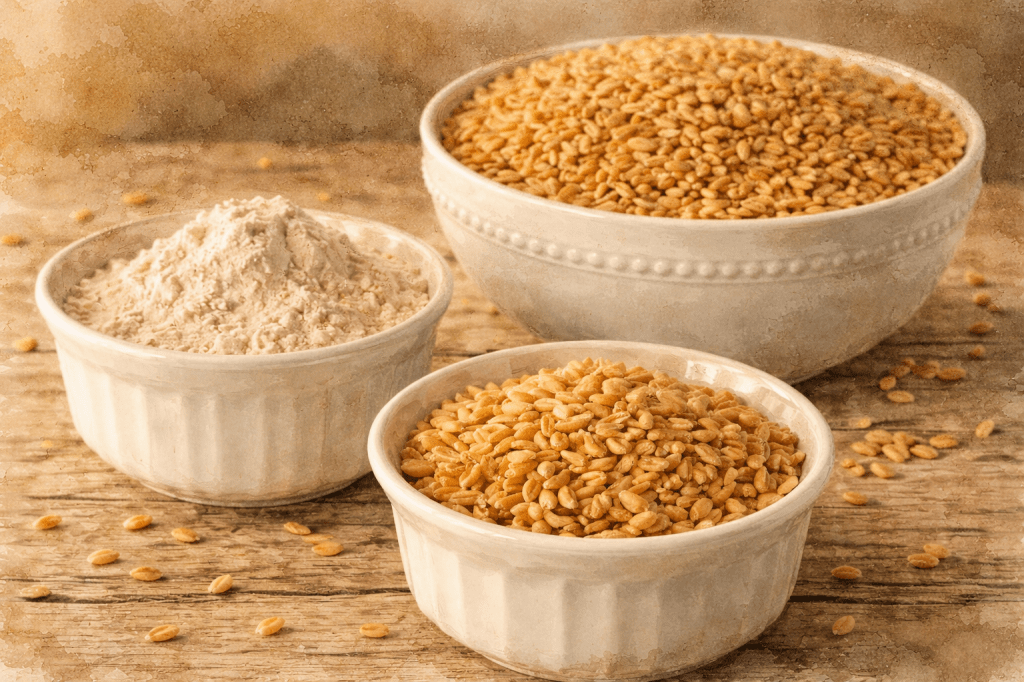
Freshly milled flour is made by grinding whole grains right before you use them. This means all parts of the grain—the bran, germ, and endosperm—are kept intact and haven’t had time to degrade.

In contrast, most store-bought flours (even organic ones) are milled weeks or months before they reach your pantry.
The biggest difference between freshly milled flour and commercial flour is that it uses the whole grain. Fresh milled flour includes all three parts of the grain:
- Bran (fiber-rich outer layer)
- Germ (nutrient-dense core with healthy fats)
- Endosperm (starchy middle)
Most commercial white flours remove the bran and germ, which strips away nutrients.
Nutrition
When it comes to nutrition, freshly milled flour is clearly the better choice. Because it’s used immediately after grinding, it retains more vitamins, healthy fats from the germ, fiber from the bran, and antioxidants that degrade over time.
Organic unbleached flour is still a good option compared to conventional flour, but there are some differences:
White flour has the bran and germ removed, which strips away nutrients. Also, many store-bought flours are enriched, meaning nutrients are added back in—but not in their original form. Even organic whole wheat flour, while nutritious, has still been sitting long enough for some natural nutrient loss to occur.
At many times during civilization, bread wasn’t just a part of the human diet, it was the diet. For instance, during the Medieval times (500 CE – 1500 CE) bread made up 60-80% of the daily caloric intake for peasants, with people eating bread at every meal.
If we did that today using ultra processed flour and store-bought breads, we likely wouldn’t be as nutritionally satisfied as the peasants in Medieval Europe!
Processing & Ingredients
Freshly milled flour is as simple as it gets:
- Whole grain
- Nothing added or removed
Organic unbleached flour does offer benefits, especially in how the grain is grown (without synthetic pesticides). However, depending on the type:
- White flour is refined
- Nutrients may be added back artificially (ever notice the term “enriched” on a bag of flour?)
- It’s processed for longer shelf stability
So while organic flour is a cleaner option than conventional, it’s still more processed than fresh milled.
Baking Performance
Store-bought flour is designed for consistency, predictable results, and ease of use.
Freshly milled flour behaves differently. It absorbs more liquid, doughs can feel wetter, breads may be denser if not adjusted properly.
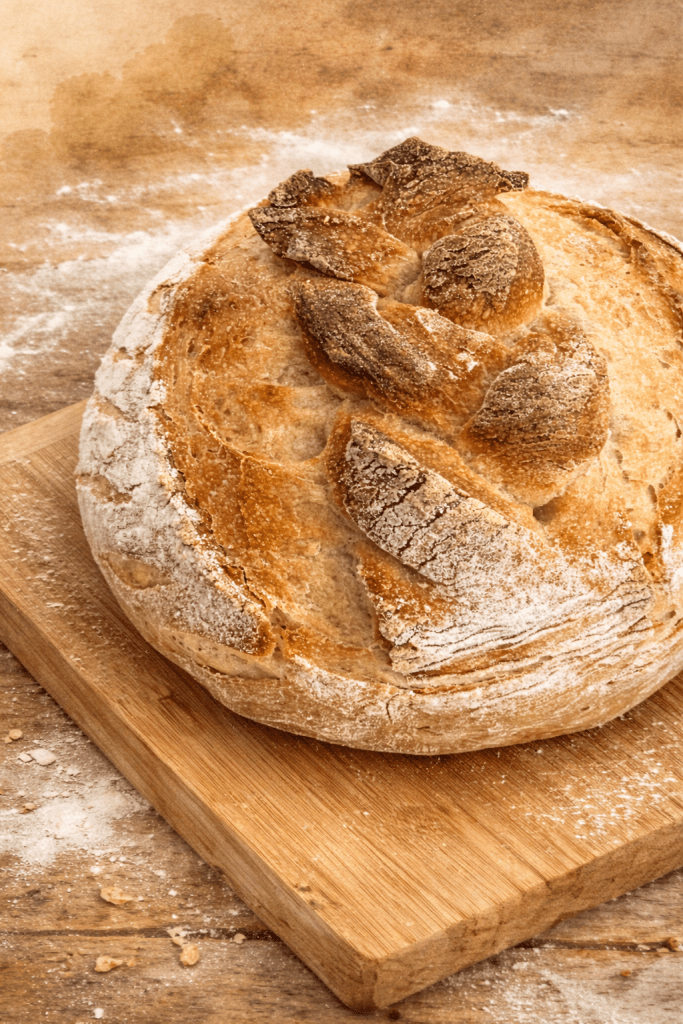
This doesn’t mean it’s worse—it just requires a learning curve. Once you understand how it works, you can get beautiful results, but it’s not always a direct 1:1 swap right away. I’ve definitely needed to experiment a little bit more while making sourdough bread. If you’re interested, I can share my recipe that officially works every time!
Taste
One of the biggest (and most surprising) differences is flavor.
Freshly milled flour has a deeper, nuttier taste. It has more complexity and simply tastes like real food. Store-bought flour tends to be milder and more neutral, which can be helpful in some recipes but less exciting overall.
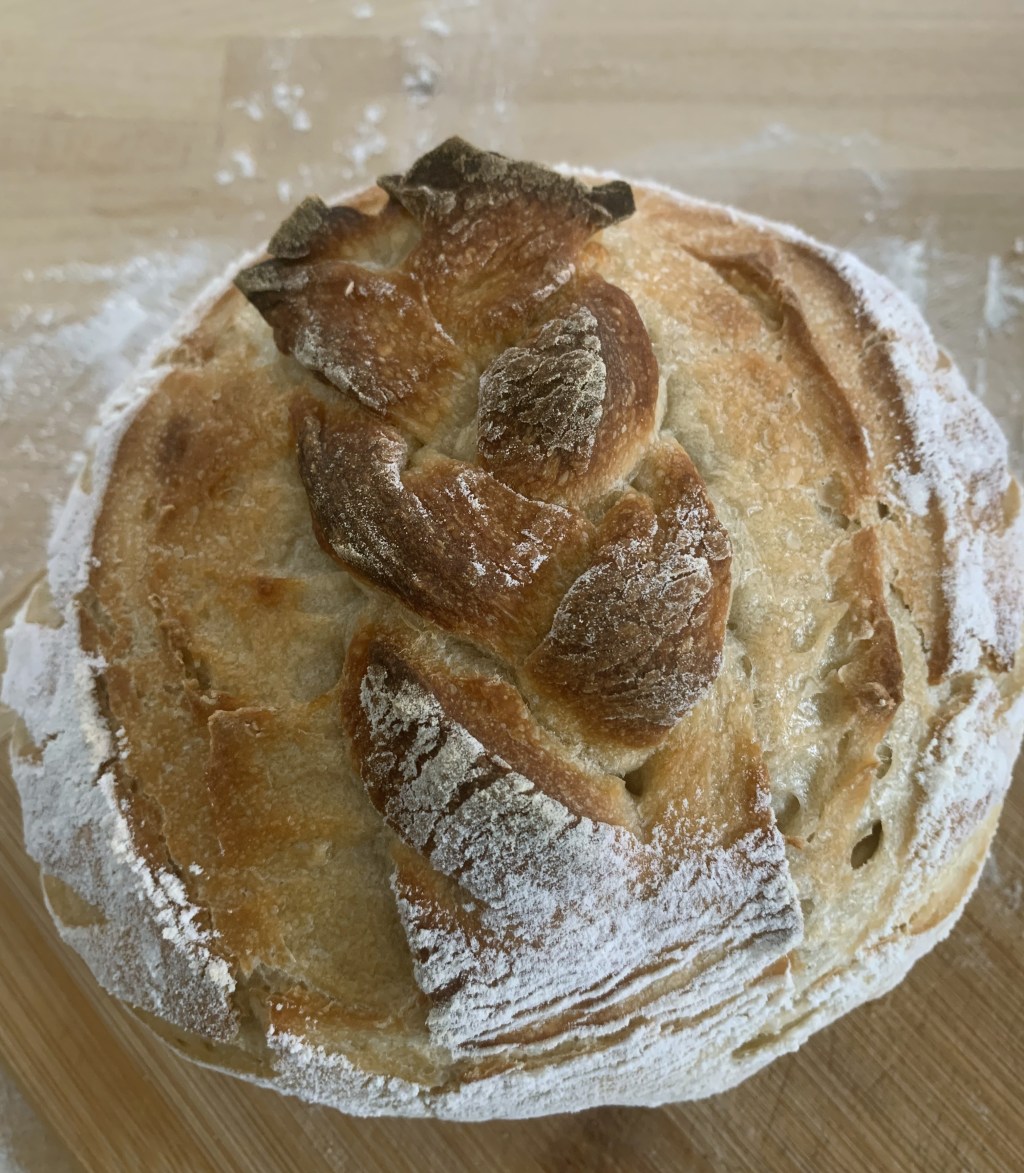
When I first started baking with freshly milled flour, my husband and I noticed an immediate and stark difference in the taste. Personally, I wasn’t sure I was going to love it. However, over time, I’ve become obsessed with my sourdough bread made with freshly milled flour. It’s so delicious and truly exceeds store bought in every way. We went to my sister-in-law’s house a couple of months ago and she made grilled cheese sandwiches. We were shocked at the taste of store bought bread; it tasted fake and almost cake-like. I was excited to get back to my bread!
Shelf Life
Freshly milled flour contains natural oils from the grain’s germ, which means it’s best used right away (or within a few days) and can go rancid more quickly.
Store-bought flour, especially white flour, lasts much longer because those oils are removed or stabilized.
So, Which One Is Better?
The honest answer: it depends on what matters most to you.
Freshly milled flour is better if you want:
- Maximum nutrition
- Whole, unprocessed ingredients
- Rich, complex flavor
- A more traditional approach to baking
Organic unbleached flour is better if you want:
- Convenience
- Consistent, predictable baking results
- Longer shelf life
- A still-healthy, easy-to-use option
A Balanced Approach
The best part is that you don’t have to choose just one!
If you’re new to fresh milling, a simple way to start is by using 50% freshly milled flour + 50% organic flour, or use fresh milled for bread and organic flour for quick recipes like cookies or cakes. This gives you the benefits of both without feeling overwhelmed.
Or if you’re like me, then jump right in! I use freshly milled flour for almost everything now. The only thing I don’t use it for is feeding my sourdough starter – it doesn’t seem to work well unless it’s all purpose flour. Not sure why, but I’ve heard others with that issue too.
Final Thoughts
Freshly milled flour is, overall, the more nutrient-dense and traditional option. But high-quality organic flour is still a great choice.
The most important thing is choosing what works for your home, your time, and your cooking style. Even small steps toward less processed ingredients can make a meaningful difference.
If you’re curious about getting started, the next step is learning which grains to use and how to adapt your favorite recipes. I’d love to share the grain mill I bought, which wheat berries to use, and other helpful tips if you’re interested.
Thanks for reading.
– LD




 Simple Little Moments
Leave a comment