Before having kids, I didn’t pay very much attention to the household products I used. I mostly chose products based on their advertised effectiveness, scent, or simply aesthetic packaging.
After I became a mom, I started to be more conscious of ingredient labelling and what was actually in those products with pretty packaging. I started researching a little more into why the scents were so strong and seemed to last forever. I quickly began to learn the toxicity of many household products and the health risks that can be associated with long-term use of many of these “safe” products. This post will explore why switching to natural household products matters, along with my favorite natural alternatives to common household products.
Find Your Favorite Natural Alternative
Ultra-Simple Natural Dish Soap
Natural Dryer Sheet Alternative

Why Switching to Natural Household Products Matters
Many common household cleaners contain chemicals that can be toxic depending on their concentration and how they are used. While most are safe when following label instructions, they can pose acute or long-term health risks through inhalation, skin contact, or accidental ingestion. Switching to natural household products allows you to have complete control over the ingredients used and can even be cheaper over time.
Common Toxic Ingredients
- Ammonia: Found in glass cleaners; it is a corrosive gas that can irritate the respiratory tract and eyes. Mixing it with bleach creates potentially fatal chloramine gas.
- Chlorine Bleach (Sodium Hypochlorite): A powerful disinfectant that can burn skin and irritate lungs. It reacts with acids (like vinegar) or ammonia to form toxic gases.
- Formaldehyde: Used as a preservative in some detergents and air fresheners; it is a known human carcinogen and a respiratory sensitizer that can trigger asthma.
- Phthalates: Often found in synthetic fragrances to make scents last longer; these are endocrine disruptors linked to reproductive and developmental issues.
- Quaternary Ammonium Compounds (“Quats”): Used in many antibacterial sprays and fabric softeners; they are known “asthmagens” that can trigger or cause asthma.
- Sodium Hydroxide (Lye): Found in oven and drain cleaners; it is extremely caustic and can cause severe chemical burns to the skin, eyes, and throat if swallowed.
Getting Started on Switching to Natural Products
It can often feel overwhelming when you start to realize the toxic products or ingredients in your home. It can feel like everything around you is actively working against you! I remember feeling extremely overwhelmed when I started paying attention to the household products I was using and felt like I needed to throw everything out and completely start from scratch. Although that is totally a possibility, it isn’t a practical method for most families. Here’s what worked for me:
- Start small: choose 1-2 household products you’re going to replace with natural household swaps. For me, I chose an All-Purpose Cleaner for kitchen surfaces.
- Invest in a few essential tools/ingredients: these items will be used repeatedly for numerous DIY solutions.
- Use up household products and do not re-purchase: since we’re on one income and I didn’t want to actively waste money, I vowed to used up products and swap to a natural alternative after that.
- Be patient: you don’t need to switch over to a non-toxic, natural home overnight. Even though it can feel scary & overwhelming when you start researching, avoid burnout by being patient during your transition to a more natural home.
Tools You’ll Need
Most of the tools you need for switching to natural alternatives end up being used for lots of different natural product recipes. My favorite tools and ingredients that are used in most of these recipes are:
- Vinegar
- Castile Soap
- Essential Oils (optional)
- Baking Soda and Washing Soda
- Vegetable Glycerin (optional)
- Empty spray bottles, detergent bottles
- Funnel
Natural Alternatives to Common Household Products
Easy Natural Dish Soap
Ingredients:
- ½ cup liquid castile soap
- ½ cup distilled water
- 1 tablespoon washing soda
- 1 tablespoon vegetable glycerin (optional)
- 10–15 drops essential oil
Instructions:
- Warm the distilled water slightly (not boiling).
- Stir in the washing soda until fully dissolved.
- Let the mixture cool slightly, then gently stir in the castile soap.
- Add glycerin and essential oils if using.
- Pour into a reusable dish soap dispenser.
- Shake gently before each use.
Ultra-Simple Natural Dish Soap (my favorite)
Ingredients:
- ¾ cup liquid castile soap
- ¼ cup distilled water
- 10–15 drops essential oil (optional)
Mix gently and use as-is. Great for lightly soiled dishes.
Natural All-Purpose Cleaner
Ingredients:
- 1 cup distilled water
- ½ cup white vinegar
- 1 tablespoon liquid castile soap
- 10–15 drops essential oil (optional: lemon, tea tree, lavender, or eucalyptus)
Instructions:
- Add the water and vinegar to a spray bottle.
- Gently swirl in the castile soap (don’t shake).
- Add essential oils if using.
- Swirl gently to combine.
How to Use:
- Spray on countertops, sealed surfaces, appliances, and bathroom fixtures.
- Wipe with a clean cloth or paper towel.
- For tough grime, let it sit 1–2 minutes before wiping.
Important Notes:
- Do not use on natural stone (granite, marble, soapstone) — vinegar can damage it.
- Avoid shaking; castile soap foams easily.
- Store at room temperature and use within 1 month.
Natural Laundry Detergent
Ingredients:
- 1 cup liquid castile soap (unscented or lightly scented)
- ½ cup washing soda
- 1 tsp baking soda
- 1 tsp kosher salt
- 4 cups + 10 cups distilled water
- 10–15 drops essential oil (I prefer using lavender)
Instructions:
- Heat the first 4 cups of distilled water until warm.
- Stir in the washing soda, baking soda, and kosher salt until fully dissolved.
- Let cool, then gently stir in the castile soap.
- Add essential oils if using.
- Using a funnel, pour into a labeled container and shake gently before each use.
How to Use:
- Use ½ cup per washing load.
Wool Dryer Balls (Natural Dryer Sheet Alternative)
How to use:
- Add 3–6 wool dryer balls to the dryer with wet laundry.
Benefits:
- Naturally softens clothes
- Reduces static
- Cuts drying time
- Reusable for hundreds of loads
Optional scent:
- Add 2–3 drops essential oil to one ball, let dry 10 minutes, then toss in.
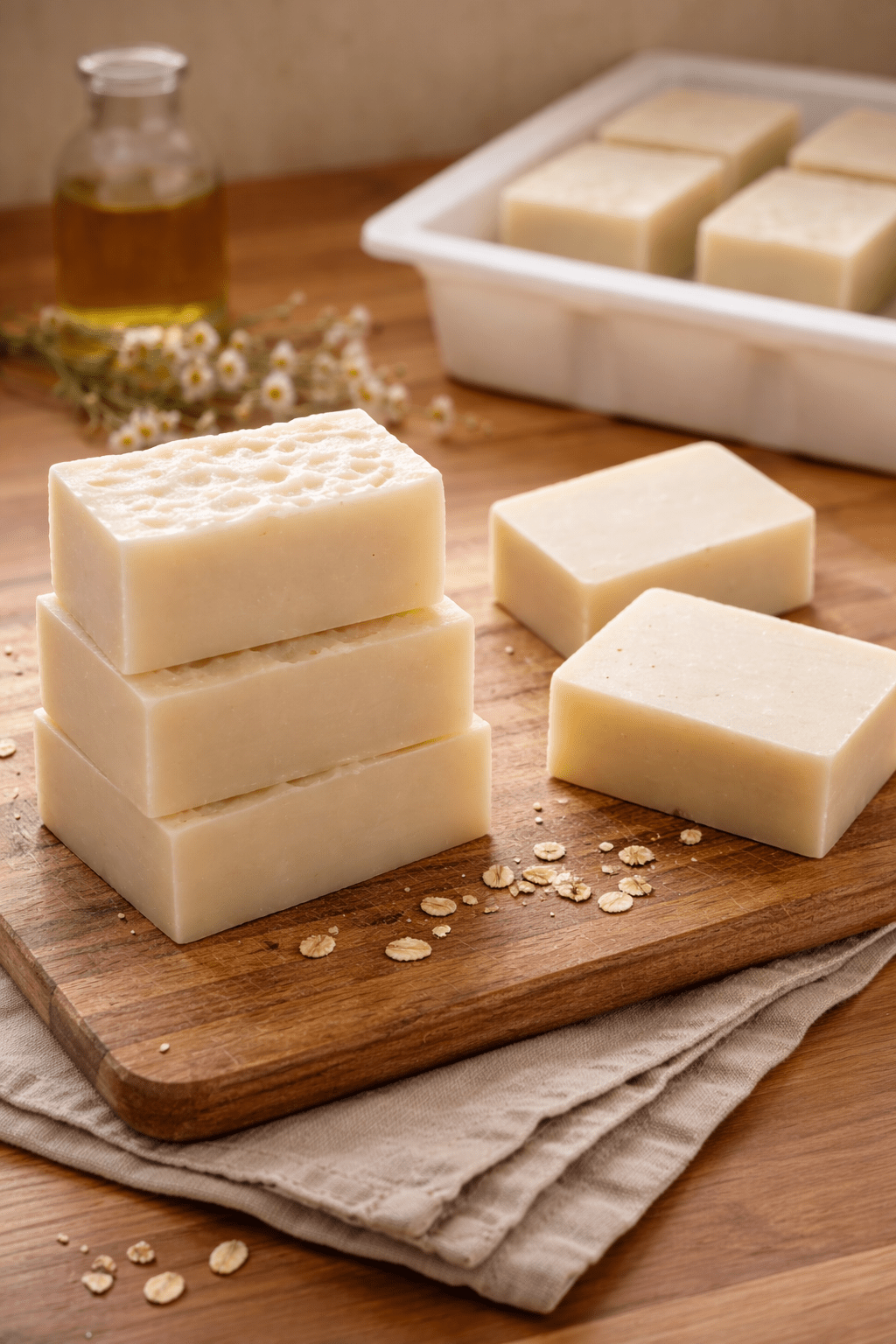
Natural Hand Soap
Ingredients:
- ½ cup liquid castile soap (unscented or mild)
- 1½ cups distilled water
- 10–15 drops essential oil (optional: lavender, lemon, sweet orange, or tea tree)
Instructions:
- Add the distilled water to a clean soap dispenser.
- Gently pour in the castile soap (avoid shaking).
- Add essential oils if using.
- Swirl slowly to combine.
- Label and use as normal hand soap.
Conclusion
Doing a complete overhaul of all your household products at one time can be overwhelming. I recommend being patient with yourself as you learn these easy recipes, get used to how best to use them, and slowly use up any household products you don’t plan to repurchase.
These recipes are simple, effective, and will hopefully help you on your journey to a more natural (and less toxic!) home.
Thanks for reading! Leave a comment with your most used recipe from this list.





 Simple Little Moments
Leave a comment